Showing posts with label dyeing. Show all posts

Friday, September 25, 2015

landscapes


I took a weekend off last week, heading over to the western side of the state to gather dyestuffs and write. NaNoWriMo is a few months away and I came so close to finishing last year that I want to give it another, more planned out, try. I have a few new ideas about how I want to format the story. Maybe as a zine? I'm also narrowing the physical range of the main character, making it more local.


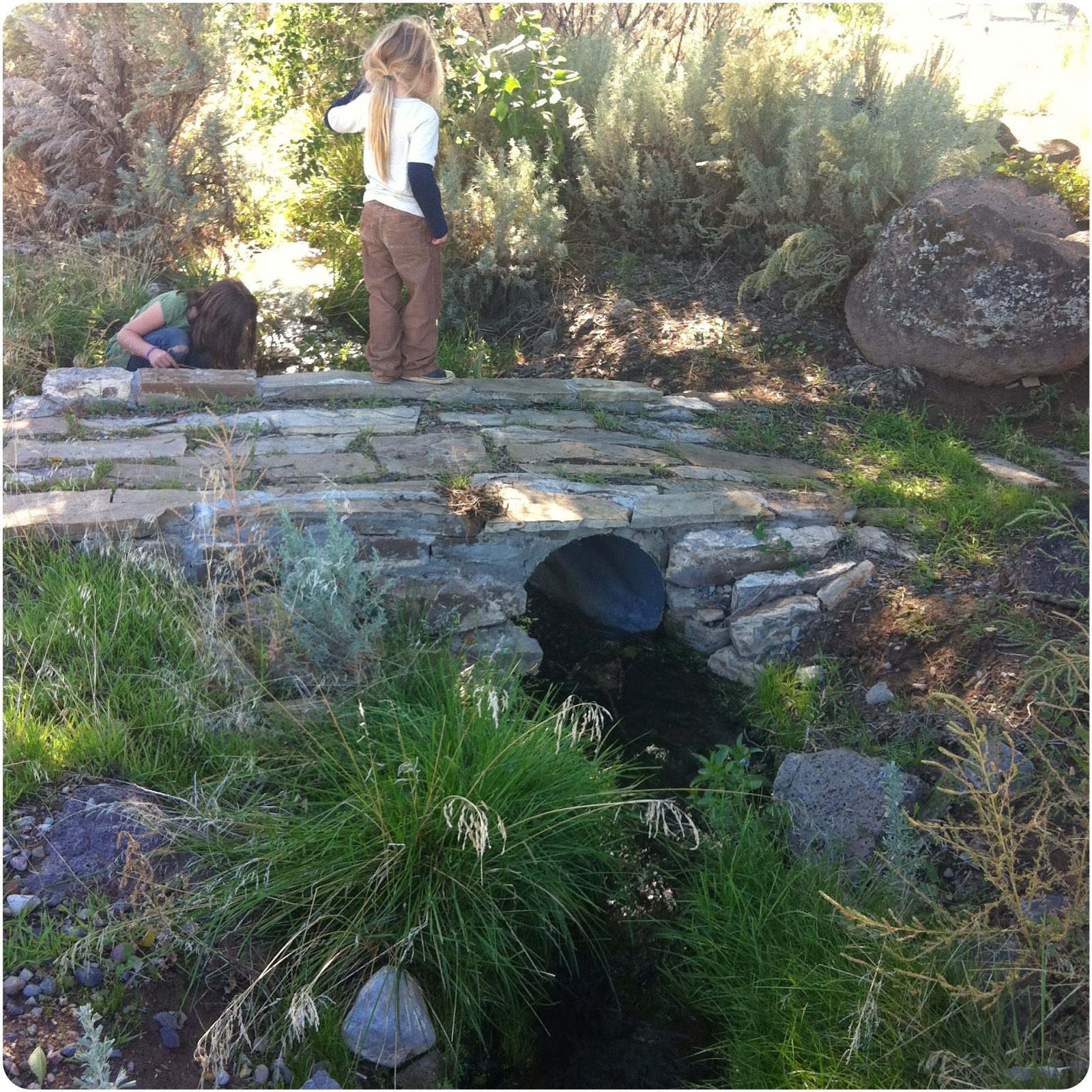
 On the way up to Grand Mesa I stopped briefly in the desert, up above the canyon where I grew up. I followed a hawk down this draw and found several patches of rabbitbrush, one seeded juniper and horehound. I didn't realize it was horehound until I got it home and was able to look it up. I thought it was a prickly sort of mint. Now I wish I had picked more, but at least I know where it lives. It felt like stumbling across a whole glass bottle from the 1800's.


 When I got home I put all of the plants in the dyepot together. It smelled amazing! The rabbitbrush can be overpoweringly medicinal on it's own but the rest of the plants balanced it out and it was like having a giant potpourri crock going on the stove all day.

Friday, September 18, 2015

deliberately


I've been turning a bit inward lately. Spending less time in the studio and more thinking about projects I've shelved, playing Catan with the kids and listening to lots of music. I'm still producing, just at a reduced pace. I think it has a lot to do with the renaming and wanting to take the opportunity to be more deliberate rather than doing all the shoulds. What does this hybrid artform of mine look like when I take away all the expectations? What do I make when I just...make?

   
What's got leaf peepers thinking twice about driving up to the mountains this year has got me curious. There was a tree fungus that thrived from the unusual amount of water we got in the spring. The baby trees look like they were set on fire but the most established ones just have lots of funky leaves. Some with spots and some with burnt looking edges. Aspen makes one of my favorite yellows and greens. I'm wondering what kind of shift I might see in this years dye pot.
  
 I've been craving a new tattoo. Two actually. That Danielle LaPorte is a fantastic influence. She's putting out a range of gorgeous, shiney sacred geometry temp tattoos. The Metatron's Cube is calling to me. It contains all five platonic solids, reminding me a bit of that disc on Voyager that's supposed to be a crash course in what humans are. Only from the past instead of flying through the universe. The second tattoo is one I've been wanting for a few years now. It combines a Mollisonism and an image from Nausicaa of The Valley of the Wind. A stylized Ohmu with the phrase "everything gardens" underneath.

Friday, July 24, 2015

I am rainbow-freaking-brite


 I think of what I do as art, even if the outcome looks like a bit of craftwork. I think it okay to be both, but in my heart I call my self an artist before I correct my inner monolog with 'artisan'.
Whatever I am, my work seems to be moving toward accepting how much I love the minutia of the process of building a finished piece.


To that end I'm building up the studio's supply of naturally dyed fiber, because the process gets stretched out more going that route. And because I like it when my actions reflect my values. The past couple of weeks have been focused on working through what dyestuffs I have on hand, stashed away in bottles and jars. Aspen liquor and black walnut tea from last year. Madder root and cherry bark. A dormant indigo vat brought back to life with yeast and sugar.


Last week I spotted lupins on a walk with friends up to the cemetery and went back the next day to gather enough to experiment with those, too. It's given more of a yellow than that gorgeous inbetweeny green I've seen other dyers get, but I'm glad to add them to my list of wildcraftables up here. I'm headed to the western slope this weekend and plan to bring back some big basin sage for a dye workshop I'm leading on the August 1st. Sages give off a yellow, too. but it's a brighter, acid sort of yellow that shifts to greens with copper or iron. It's one of my favorites.

Monday, April 20, 2015

 I think I'm getting the hang of blue. I've read that tropical indigo is easier to work with than woad or japanese indigo and I don't know if that is true or if I was just less anxious about it this time around. It did seem to turn the fibers a more dramatic shade on the first dip, though. And it smells less rotty.
My sister sent along her Lendrum wheel and some other fun stuff with my parents when they came up to see the kids' play. I've been using it to spin up a few more batches for the farmer's market this weekend (eek). The bobbins are so much smaller, but it's also sturdier and faster than my wobbly Louet.
Anais already claimed one of these pots of salve. Scrawled her name on the lid with a sharpie and ran off with it. I wanted to add something small and not made of fluff to my line. A nice, melty all salve seemed like a good fit. The base is olive and sunflower oil solar infused with calendula, rosehips, comfrey and cardamom. Then I added st. john's wort oil, honey, vetiver, orange oil and just enough raw beeswax to firm it up. With this formula it's good for everything from dry skin and lips to small scrapes and bruises.

Friday, April 10, 2015

catkins, cat eggs, averting catastrophe


I can see signs of things waking up, even up here at 9000'. The aspens are spreading out their catkins, robins are starting to give the jays hell. We experimented with plant dyes on easter eggs this year. The kids especially loved how bright pink cabbage juice makes for blue and green. I wondered how much better they'd absorb dye if you hollowed them out and soaked them in vinegar or alum first.


Sometimes I take the scenic route when working with dyestuff. A while back my aunt and uncle
obliged my request for a few boxes of pruning leavings from the fruit trees in their orchard. After soaking this pot-full of the fruit wood twigs for a week I set them on the stove to steam one day and added yarn to the pot the next.  After a cold soak over another day or two I put it back on the stove and repeated the steaming. What had been a decent pale yellow deepened into an almost rusty ochre.


 And then I thought about adding iron water. So I did. Looking back now I wish I had left this first batch alone. But the resulting cool medium gray that developed on those middle skeins of silk is a color I've never gotten before. I keep thinking of things I'd like to knit them up as. With the weather warming I keep thinking of camping, fishing in the early morning hours and the perfect hiking hat. Maybe this one, or this?

Friday, March 20, 2015

unsweatering


It was warm enough the other day to open the window and let Angie scheme about what she would do when she escaped to the outside again. When we first moved here last spring she managed to scramble up our bed and slipped out the broken screen. I had no idea until we ran into each other on the back porch. Ever since that day she's known she's being kept from all the fun and longs for a ferret ladder to an open window.


I'm toying with the notion of adding reclaimed, plant dyed yarn to the farmer's market booth. I keep an eye out for not-acrylic sweaters when we go thrift store shopping. It's a cheap, if labor-intensive way to add 1,000 yards to your stash. I've deconstructed a few this week and realized that they all seem to have a chirality to them, a handedness to the direction in which each garment was seamed together. Once I caught on to it I was able to break them down much faster and with less fear of wasting yarn by cutting the wrong bit.


 I love the range of colors you can get from rubia tinctorum, from pink to purple and even yellow. But, the next round of madder I buy is going to be chopped and not powder. It's such a pain in the dye bath. Either you let it free and it gets all over the fiber or you have to use a tea towel to strain it because anything with a looser weave will let it get all over everything anyway. If I had more patience it probably wouldn't even be an issue. This dye bath gave my a nice purple with pink highlights on a wool and cotton blend. The leftover bath is cold processing some lambswool skeins in a tucked away corner of the kitchen. So far they're a pale orangey pink.

Thursday, November 20, 2014

skillsharing

 This is the time of year I find myself knitting and knitting and knitting for craft shows. My goal is to have ten pairs of fingerless gloves on my table, among other things like hats and spinning kits and yarn. I just finished these gloves last night. They're extra long and all handspun. I'm tempted to keep them for myself, I like them so much. But then I'd have to make one more pair to meet my self-imposed quota. Meh.
 I decided to try and overwiner our tuscan blue rosemary. I'm not sure if it could have hacked the minus whatever-it-gets-to-here nights. It's flowering now and that generally makes me wonder if I'm making it happy or stressing out so bad that its making itself pretty in a desperate attempt at reproducing before it dies on me. I might try cutting it back a bit and making starts from the cuttings. I got the idea from this Juniper Moon Farms blog post.

 I've been making time to play with natural dyes lately, too. I'm brushing up because I'm teaching a yarn dyeing workshop with the Living Arts School on December 7th. The focus is on locally available dyestuffs, plants you could find growing wild plus a few you could easily incorporate in your own garden here in Colorado. I'll have a mix of prepared and whole plants and go over the various ways to tweak a dye bath to get more than one color/shade from each plant.

By way of example, here are some examples of a few of the dyes we'll be playing with. The browns are from black walnut hulls gathered in Wash Park in Denver. From left to right its been dyed onto tussah silk, hemp and alpaca. The pink(hemp) and orange(silk) are from the same bath of safflower petals. You can get a yellow from the same dye pot, too. The nice thing about safflower is that you can do the whole process cold.


This is from an indigo vat I've stashed in a corner by the stove. The fiber is silk that has been sitting in situ as the vat ferments and the gray-blue color has touches of red where the madder root took hold of the fiber, too. It's back in the vat and hopefully it'll get blue-er. I like the storm cloud quality of this stage too, though. The blue we will explore in the class will be more traditional, from woad and should produce a truer blue than this one.


 The jar is full of alkanet root that's been soaking in some Everclear that I found in the cupboard when we moved in. Alkanet isn't water soluble but alcohol will draw it out and create a deep purple/red color. This one doesn't exactly fit into the "local" rubric, but I'll probably bring some to the class anyway in case someone wants to try it. It gets used in natural cosmetics commercially and grows wild in Europe. It's a lot harder to find seeds for it here but I've seen them on Etsy now and again. This batch is currently evaporating out as I add snow to it so I can dye fiber in it without turning it into alkanet flambe.


Wednesday, November 5, 2014

black walnut

     I've got things in the works. Namely, a dye class in the first week of December and a craft show during the second, plus stocking up for Christmas Market in Georgetown. Which also means I have a whole lot of spinning and knitting and dyeing ahead of me.  Adding NaNiWriMo to all that was an awesome idea, too, right? It hasn't been all that difficult actually. It helps that I've been doing research for it for years now. And 1,700 words per day is not as impossible to get through as it seemed. My main concern is what happens when I run out of things to write about. Hopeful that won't happen before I get to 50,000.

     In between all the hands one stuff I have to get done I've added a few vats to work themselves out in the background. Here's a shot of the black walnut. It's as smelly as it looks. All those bubbles mean its fermenting which hopefully means its releasing a lot of dye compounds, too. Although with black walnut, I hear, a little goes a long way.

Wednesday, October 22, 2014

aspen & nettle

     The dye vats were calling to me after I finally finished a pair of custom gloves I've been sloooowly working on for the past few weeks.  I can't wait to show them to the person who asked for them. They're a longer version of the striped gloves I usually make for craft shows, but the requested yarn is also bulkier. This made them much warmer and makes me think more of hiking/biking than typing but they turned out beautifully all the same.
  
     The vats of aspen and nettle I have going are not beautiful. I let them ferment as they cold-process, leaving the dyestuffs in for as long as my nose can stand it. They've reached peak smelliness with that scuzzy mold on top. The nettle is the primary offender. The word putrid comes to mind before I even lift the lid. While that sucks for air quality in my kitchen, it also means that the pigments and the fiber are getting along famously. I finally cracked and cycled the first round of fiber out of the nettle and aspen this morning.

     I worked outside on the porch to minimize any lingering zombie stench, not to mention the mess. These chickadees were hanging out with me the whole time. Well, they were mostly hanging out in the aspen trees and the bird feeder. But, when I stopped for a bit to watch them one did get curious enough to investigate my shoes.


     Specific fibers interact with natural dyes in differing ways for lots of reasons. One thing I've noticed is that silk will take up color with vibrancy while wool is more subdued. This batch was a good illustration of that general rule. The silk and alpaca came out of the aspen bath dyed a bright acidy yellow and the hampshire wool came out of the nettle a pale sort of greenish yellow. There was still one more step. I started bottles of copper and iron tea last fall for afterbaths and mordanting.  This was my first opportunity to play with them. On the aspen-dyed silk and with the copper, at least, the effect was pretty magical. It went from that acid yellow to deep green. The nettle...eh. It was a deeper, kaiser green last year but then I also pretty much forgot about it for a month or two, leaving it in the closet. And I used scottish blackface wool, which takes up dye almost as greedily as silk does. Maybe I'll try that for round two.

From left to right, the aspen-dyed alpaca and silk with alum moradant, then iron afterbath and copper afterbath. The next photo is the nettle-dyed hampshire wool with the same progression: alum, iron afterbath, copper afterbath.


Wednesday, October 8, 2014

visiting


We went to visit family last weekend and brought home what's become a regular assortment of veg and dyestuffs. There were even a few immature cotton bolls to play with and a surprise patch of japanese indigo. The kids splashed around in the ditch and picked popcorn and ran around with the dog. Most of what came home has been eaten or processed by now. The tomatoes were roasted and canned up, the green beans were munched like edamame with leftover ham the first night we got home. There was even a baby ladybug that hitched a ride in the squash and got transplanted to an aphid-ridden artichoke I'm attempting to overwinter.


The dyestuffs have been put to work now, too. All of these are hanging out in various canning pots and those giant pails you use for beer brewing, tucked into a corner of the kitchen to ferment and soak up the color. Some were heated beforehand to draw out the dye, some were not and some don't even have fiber in them yet because I haven't quite made it to that step. I'll get there...eventually. The only plant I haven't harvested yet is rabbitbrush. I'm not sure what I'd put it in, I seem to be out of large pots. Maybe I'll skip it this year, unless I run into a good patch of it out there. There's no shortage of it, but sometime soon it'll all have gone brown for the year. 


Wednesday, October 1, 2014

backyard wildcrafting


  Before the wind and frost take them all away I recruited the kids to help me gather up some of the aspen leaves. They have a little grove of quakies that surrounds a digging spot of their's and last week it practically glowed yellow. It didn't take long before they found other games to play but there were so many leaves on the ground that it only took a few minutes for us to fill the pot.

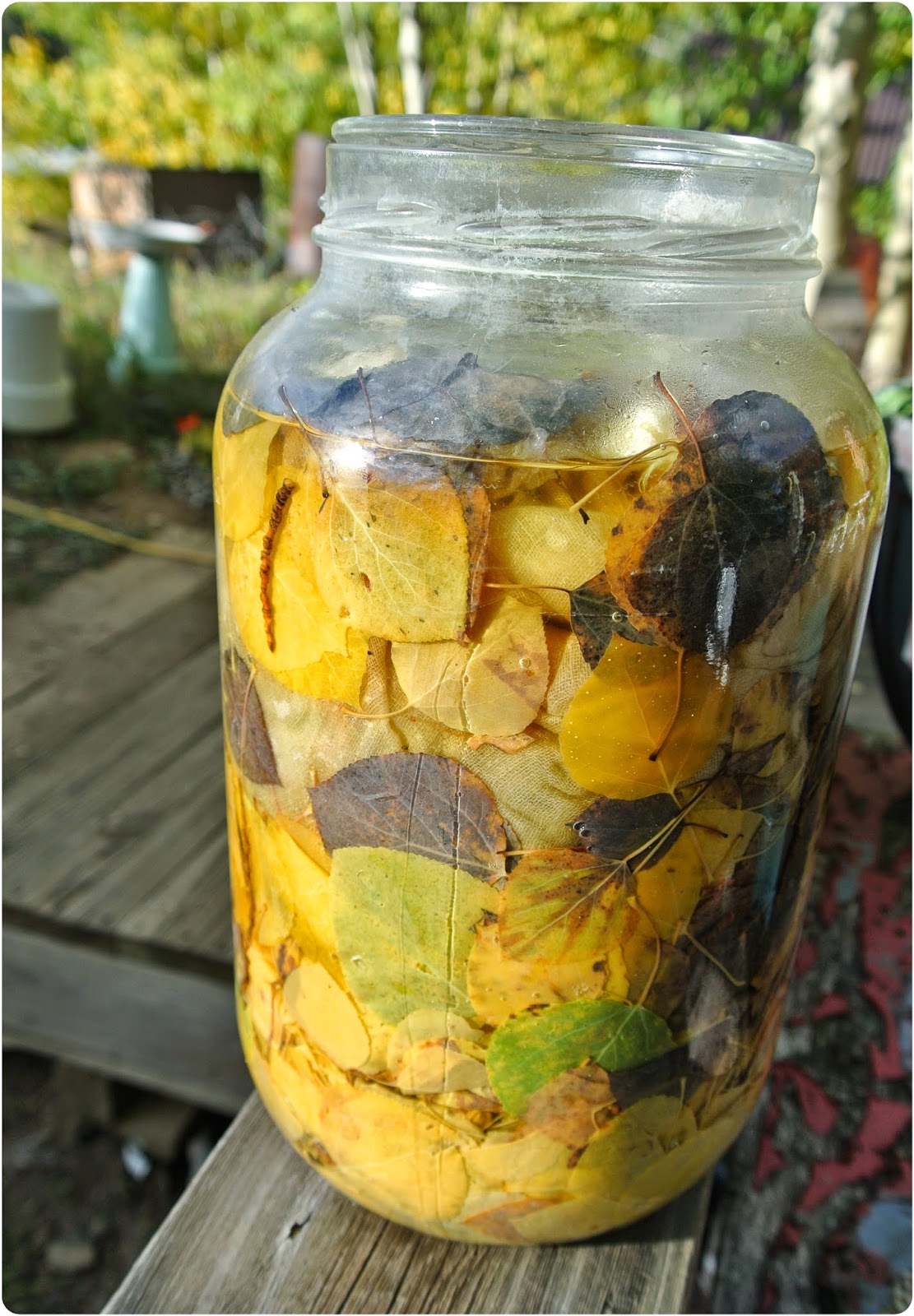
 Given a bit of heat and then some time to ferment, I've found that aspen gives up a yellow almost as bright as the leaves are right now. (That and an afterbath in iron tea will tip it over to green.) I plan on making up a few vats before the cold sets in and dyeing some alpaca and tussah I have on hand. Having our own yard now makes this plant dyeing stuff so much more convenient. Last year's aspen leaves were gleaned from the old Georgetown Cemetery.
I had a late start this year, but as of right now there is a vat of white sage hanging out on the back porch (soon to be brought in from the cold) and I have some nettle to harvest before it freezes. It probably won't give up as much color as it would have when the weather was still warm. But I bet I can still coax a pale Kaiser green out if it.

Saturday, August 3, 2013

Craft shows

I'm starting to line up a few market dates, just fall ones so far. I plan on doing at least one out of state show this winter, but I haven't decided where, yet. Maybe Detroit? Maybe somewhere in the Pacific Northwest? It depends on who wants me and how far we can afford to travel. I'm focusing on knitting things up since those get sold the quickest so I won't be updating the yarn sections of Etsy shop much between now and then. I'll be debuting my indigo dyed yarns and I hope to have a few more sorts of jewelry, too.

The two dates I have so far are for the Firefly Handmade Autumn Market on September 2st & 22nd in Boulder, CO and the Paonia Mountain Harvest Festival on September 26th through the 29th. Actually, the market part is just the 28th and 29th, but there are lots of cool things going on all weekend. Farm tours and live music and a kids' bike parade...I'm excited to dust off Bill and take the whole family up there. Paonia has been calling to me for a while now and I'm glad I was able to be a part of this event.


Wednesday, May 29, 2013

Plant-dye thriftscore


With spring finally asserting itself up here I've been cracking open my natural dye books and keeping my eyes open for ones I can't live without. I found an obscure spiral-bound beauty at the coffee shop & used bookstore down the street for a few dollars. It's one of those government extension office publications on the topic of what to replant in disturbed or stressed BLM and park areas. Which means its basically a guide book for a surprising number of plants that are useful as dyestuffs, on public land no less. Black walnut, rabbitbrush, sage, aspen, etc. Besides all of the diagrams it also has a section on each plant for its ideal habitat and associated species. I love the idea of having more than just photos as a visual reference and its uber-sciency, to boot. Plus it's pages are just begging for notes to be scribbled on them.

I have a sage dye pot going from clippings I brought home from grandpa and grandma's. I think the smell of sage is one of my happy places, now. Grandpa kindly agreed to try and grow some Japanese indigo for me. If I had more space of my own I'd like to think I'd create a polycultural dye garden, but as it is I barely have space for my tiny cold frame and pallet herb garden thing. So thank goodness for indulgent relatives.


Monday, February 11, 2013

Formulaic


I had a few firsts this last week. My first custom yarn order, which necessitated my first attempt at intentionally recreating a couple of colors. It's a task I had ever really considered before. The thing is, I have these color formulas I use for the low-impact synthetic dyes. I keep them written down on a few dye-stained pages in my master notebook. They're little bits of arithmetic for the colors I've come to use over and over. It's kind of like having my own personal pack of crayons, some with names I've given them myself. Names like rusty grape or broken black. But for all the times I've used them it never occurred to me to notice how close one batch has been to another. Variation is kind of built into the process. In fact I love being able to invite chaos in. The surprises generally outweigh the frustration and I know of no better way to learn something new than to just leap and take notes as I go along. Different fibers take up dyes at different rates and saturations and I have a habit of putting random combinations of fibers in the jars with each round of dyeing. So color me surprised when I got both colors I needed on the first try! I guess from now on I'll have to admit that, while I feel letting chaos into my process is essential, it's a controlled sort of chaos...with compulsory sparkles.

Monday, January 21, 2013

Manifest destiny

The S. S. Bill Murray

I'm not usually the type to set goals or come up with New Years resolutions or anything like that. But it wasn't very long ago that the thought of seriously considering myself a 'yarn artisan' seemed kind of far fetched, too. Back then I was daydreaming of hitting the road with my family and spinning wheel packed into some vintage RV, but kept my feet on the ground by telling myself it was more practical to get a teaching certification attached to my history degree. Pphfftt! After the prerequisite car crash I realized that there is no 'keeping one's feet on the ground'. The ground can disappear at any time. I have a sneaky suspicion that folks who come to take themselves that seriously make a habit of plan-making, as well. Therefore, in the interest of holding myself accountable and maybe bringing myself to attention of some passing wish-granting ( not so bitey) fairy, I'm going to up and tell you my plans and my goals for Eat Agar in this coming year. There are already exciting, exigent things brewing, but I also like the idea of having a record to come back to next year. especially one that I can't spill coffee on or lose in a move. These goals are still pretty basic, as I'm a plan it now & figure out the logistics later kind of person.

🐜 one major print ad

🐜 regular online sales stream

🐜 a dedicated dye garden & a fiber rabbit

🐜 an art shows worth of fiber art (beyond the usual yarn)

🐜 a small collection of pattern postcards (5-7)

🐜 1 regular summer market w/ a max. of 2 holiday markets

🐜 perfect custom order process online & at markets

That's it chickens. You know, besides all scouring, dyeing, spinning, photog, marketing, bookkeeping, etc...Any advice on how to accomplish any of the above or whacks on the noggin with a sparkly wand are welcome.


Monday, October 29, 2012

Foraging for color

I have a new hero, her name is India Flint. Between her and Rebecca Burgess I am feeling pretty excited about this dyeing fluff with plant stuffs business. When I went back home this summer to visit family I came back with all kinds of roots and flowers and leaves to try out. My grandparents helped me pick tickseed coreopsis along the roadside and after going through Harvesting Color with me my Grandpa John pointed out that he had several sorts of pants from the book right in his yard. In Georgetown I discovered wild hops and pokeberry, possibly leftover a time when folks still ate poke sallet and homebrewing was less a hobby than what you did if you wanted some beer in the house. So, between all those foraged bags of plant matter I've built up quite the stash of yellowy, purple-grey, earthy and acid green fiber. With winter coming on I'm wishing I got out there more, stashed and dried some rabbitbrush and sage at least. But that's what winter is for-planning and scheming for the things I'll do come spring.

I'll leave you with this mini-photo essay. It documents the process I meandered through from foraging to dyeing with aspen leaves, the last plant I gathered before the cold really set in here. In between the steps I was reading India Flint's amazing book, Eco Colour and getting lots of ideas to augment what I had already learned and put into practice with Rebecca Burgess' book. I highly recommend reading both if this is a subject that catches you, too.


I gathered most of the leaves from the old Georgetown Cemetery. It's part Royal Tenenbaums and part The Graveyard Book. I noticed that the place is also a bit of a botanic garden, so I'm sure to go back soon.


I left the leaves in my kitchen for a bit, too long I thought when I went check them again. So I added some fresher leaves from my yard and used an India Flint trick...I let them hang out in one of my pots for a few days. I giggled a bit when I stirred them one morning and they started talking to me with fermentation bubbles.


I know, I know. Pee in a bottle, right? But this is the color I got after a few days of cold, fermenting extraction. The next step was putting the pot and some fiber of various mordants over low heat and repeating that cycle a few times.

Which got me this handful of fluff, dyed a deep, earthy yellowy-green. I noticed that the color of the dye bath had deepened to an orange color and now I'm repeating the cold/hot cycle with some unmordanted fiber.
 
One thing that caught my attention in the cemetary was the abundance of lichens. Normally it's an ecological taboo to go scrapping this slow-moving, low-yielding symbiosis all helter-skelter. But cleaning it off of old gravestones is one of the exceptions.